How AI is Revolutionizing PHI and EHR Privacy - AI in Healthcare (07)


In modern healthcare, data is the ultimate driver of clinical innovation, but it is also one of the industry's biggest liabilities.
As healthcare systems aggressively digitize, Electronic Health Records (EHR) and Electronic Medical Records (EMR) have become prime targets for cybercriminals. They contain valuable Protected Health Information (PHI), ranging from financial data to highly intimate medical histories.
With the rapid adoption of AI-driven medical tools, many fear the security perimeter is expanding too fast to control. However, artificial intelligence is proving to be much more than a security risk; it is actually becoming our most powerful ally in healthcare cybersecurity.
By embedding AI directly into the architecture of modern health systems, we can fundamentally transform how we protect sensitive patient data, proving that rapid innovation doesn’t have to compromise patient trust.
Why Regulatory Compliance Standards Like HIPAA and GDPR Matter
Before exploring the technical innovations, it’s critical to understand the global compliance frameworks that govern EHR data security: HIPAA and GDPR.
Understanding the regulatory landscape helps us build systems that prioritize both safety and compliance. Let's break down the two major frameworks:
- HIPAA (Health Insurance Portability and Accountability Act): This acts as the national standard in the US, mandating strict administrative, physical, and technical safeguards to secure the confidentiality, integrity, and availability of PHI.
- GDPR (General Data Protection Regulation): Enforced in the EU, GDPR treats data privacy as a fundamental human right. It mandates strict data minimization, purpose limitation, and the "right to be forgotten," with massive financial penalties for non-compliance.
Beyond avoiding steep regulatory fines, these frameworks are essential for preserving the doctor-patient relationship. A patient will only share sensitive medical history if they are fully confident in the system’s security. AI acts as the scaleable engine needed to maintain this level of trust around the clock.
 Hamza Musa
5 Ways AI is Securing PHI and EHR Systems
Forward-thinking healthcare developers and medical institutions are using artificial intelligence to build robust, privacy-first health platforms in several distinct ways:
1. Automated De-Identification and Patient Anonymization
Clinical narratives, discharge summaries, and dictation notes are packed with unstructured data that frequently contains accidental PHI (like names, family members, or rare locations). Manually redacting this text is slow, expensive, and highly prone to human error.
AI-powered Natural Language Processing (NLP) models can instantly scan unstructured EHR text, identify identifiers, and replace them with synthetic tokens. This process allows hospitals to utilize real-world clinical data for medical research, AI training, and population health studies without exposing actual patient identities.
 Hamza Musa
2. Real-Time Anomaly Detection and Threat Hunting
Traditional security systems rely on static, rule-based alerts. This leads to two major flaws: they are plagued by exhausting false positives, and they miss sophisticated, novel attack vectors.
AI solves this by establishing a "normal behavior" baseline for your EHR network. Machine learning models continuously analyze user access logs.
How it works in practice: If a staff login suddenly attempts to download thousands of medical records at 3:00 AM, or accesses data from an unusual IP address, the AI flags the high-risk anomaly and blocks the user within milliseconds, preventing a potential data breach before it can even start.
 Hamza Musa
3. Federated Learning: Training AI Without Exposing Raw Data
One of the best ways to secure data is to ensure it never leaves its native environment. Instead of migrating sensitive PHI to a central cloud database to train diagnostics models, organizations can turn to federated learning.
Using this framework, the AI model is trained locally on-premise at individual hospitals. Only the mathematical updates (gradients) are sent back to a centralized server to improve the global model. This "local-first" paradigm ensures that proprietary and sensitive clinical records remain safely behind each institution’s firewall.
 Hamza Musa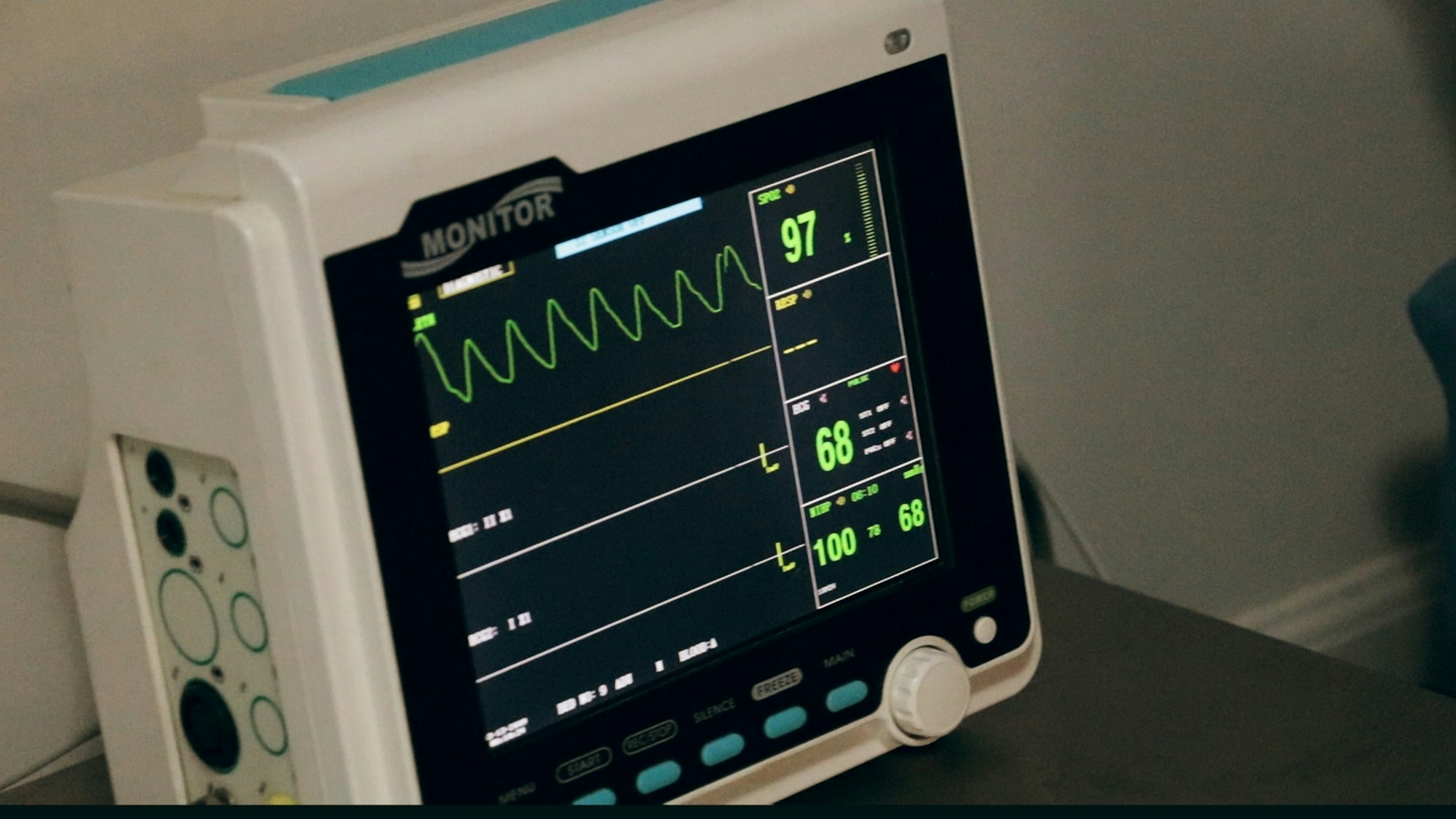
4. Dynamic, Context-Aware Access Control
Static Role-Based Access Control (RBAC) is often too broad. For instance, a nurse might have general clinical clearance, but do they need to access a patient's historical psychotherapy notes just to record routine vital signs?
AI introduces dynamic, context-aware access control. By evaluating several variables in real-time, the system determines exact clearances:
- User Role (e.g., Physician vs. Billing Specialist)
- Current Task (e.g., Active Emergency Room intake)
- Location & IP Address (e.g., On-site hospital workstation vs. remote public network)
- Time of Day (e.g., Active shift hours)
If the contextual data doesn't align with a legitimate care scenario, the AI prompts for multi-factor authentication or blocks the request entirely, tightly enforcing the security principle of least privilege.
5. Smart Consent Management
Under GDPR, patients hold the right to dictate exactly how their personal health data is processed. However, tracking individual consent preferences across fragmented, legacy systems is incredibly difficult.
AI-driven smart systems automate this by parsing patient intake agreements and dynamically enforcing those preferences across the entire EHR ecosystem. If a patient opts out of a research cohort, the AI instantly and automatically quarantines their records from active research data pipelines.
 Hamza Musa
 Hamza Musa
Best Practices: Designing AI Healthcare Systems with "Privacy by Design"
Deploying AI in healthcare cybersecurity requires a clear, deliberate methodology. To build truly resilient systems, engineers and administrators must embrace the philosophy of Privacy by Design:
| Privacy Principle | Implementation Strategy | Key Benefit |
| Open-Source Auditing | Utilize transparent, verifiable algorithms. | Eliminates third-party telemetry risks. |
| On-Premise Execution | Deploy open-source LLMs locally on secure servers. | Keeps patient data out of external clouds. |
| Data Minimization | Cleanse and redact data at the point of ingestion. | Keeps database footprints safe and compliant. |
The Bottom Line
AI is not a threat to patient privacy; rather, poorly planned infrastructure is. By utilizing artificial intelligence to automate de-identification, hunt network threats in real-time, and leverage local-first federated learning, we can transform vulnerable healthcare databases into highly secure fortresses of patient trust.
For developers, clinical officers, and healthcare executives, the mission is straightforward: deploy AI to make healthcare systems smarter, and significantly safer.
 Medevel Editor’s pick