How Better Intake Preparation Improves Patient Care


Patient intake is one of the first steps in any healthcare visit. It affects scheduling, communication, treatment planning, billing, and overall patient experience. When intake preparation is incomplete or disorganized, delays and confusion may follow throughout the entire appointment process.
Accurate Records Help Reduce Delays
Incomplete paperwork often slows appointments. Healthcare providers rely on intake forms to review medical history, allergies, medications, insurance details, and current symptoms before treatment begins. Missing or outdated information may delay diagnosis or create communication problems during visits.
Patients should review documents carefully before appointments and bring updated insurance cards, medication lists, and identification. Digital intake systems now allow many clinics to collect forms before appointments, reducing wait times at reception desks. Some healthcare organizations also use encrypted tools such as Open PGP Studio when managing sensitive digital communication or secure patient information transfers.
Medication Lists Improve Safety
Medication errors may happen when providers do not receive complete information. Patients should prepare updated lists of prescriptions, vitamins, supplements, and over-the-counter medications before arriving for appointments. Dosage amounts and frequency also matter during intake discussions.
Allergy information should remain accurate as well, especially involving medications, food, or prior treatment reactions. Clear communication during intake may help providers avoid treatment conflicts or prescription problems later during care.
Medical History Supports Faster Evaluation
Detailed medical history helps providers make informed decisions more quickly. Past surgeries, chronic conditions, family medical history, and previous treatments often affect current healthcare planning. Patients sometimes forget important details during stressful appointments, which is why written notes may help during intake.
Parents bringing children to appointments should also prepare vaccination records, symptom timelines, and prior diagnoses before arrival. Organized information often helps appointments move more efficiently.
Communication Helps Patients Feel Prepared
Patient intake is also an opportunity to improve communication. Healthcare staff should explain paperwork requirements, arrival times, fasting instructions, and insurance expectations clearly before appointments whenever possible. Confusion during intake may increase stress for patients already dealing with health concerns.
Patients should also feel comfortable asking questions about forms, privacy policies, or treatment procedures during the intake process. Simple communication often reduces misunderstandings and appointment delays.
Technology Continues Changing Intake Systems
Many healthcare facilities now use digital intake systems instead of paper forms. Online portals, mobile check-in systems, and electronic records may improve organization while reducing duplicate paperwork. Patients may complete forms at home before appointments, which often shortens waiting room time.
Digital systems may also help providers access updated patient information more quickly during treatment. At the same time, healthcare offices still need strong privacy practices to protect patient information from unauthorized access.
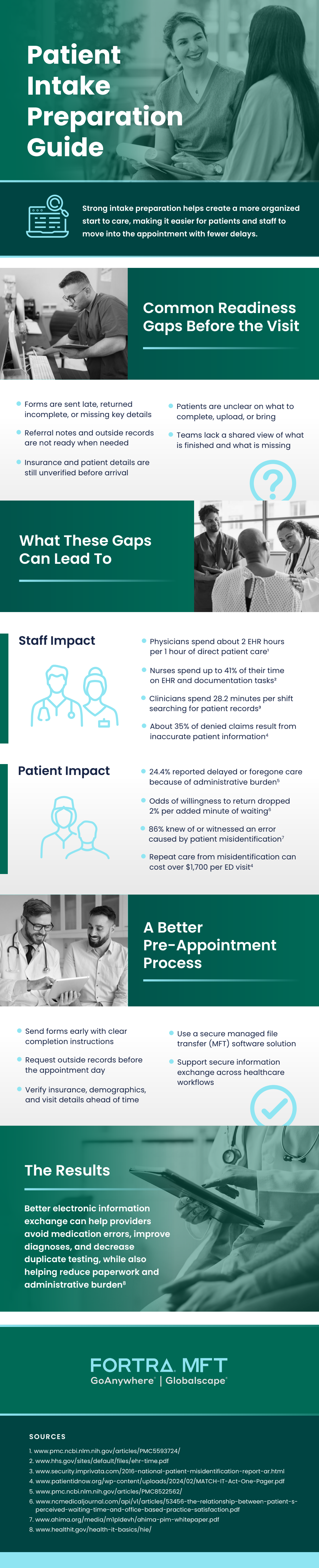
Patient intake preparation affects nearly every part of healthcare delivery, from scheduling and communication to treatment accuracy and patient safety. Healthcare facilities that improve intake preparation are often better positioned to support faster, more efficient patient care. Check out the infographic below for more information.